AI Trading Bots for Stocks: What Works, What Does Not and How to Start
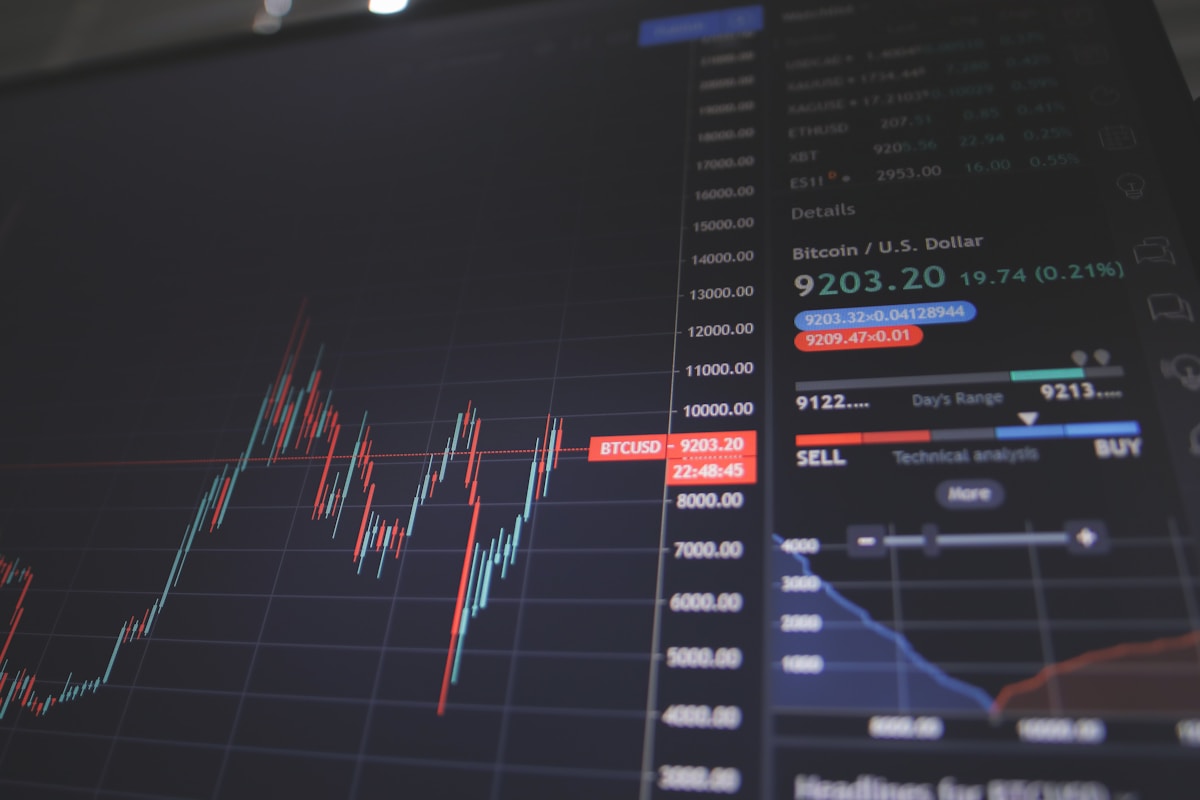
- Primary Signal: AI Trading Bots for Stocks: What Works, What Does Not and How to Start
- Overview: AI trading bots are famous in crypto, but they work differently in stock markets. This guide explains what stock bots can and cannot do, the strategies that suit equities, and how ...
- Verification: Analyzed and compiled by 1UpTrade Quant editorial monitoring desk.
Most of the noise about AI trading bots comes from crypto, where markets never close and bots trade around the clock. Stock markets are different: they open and close at fixed hours, they gap overnight on earnings and news, and they are dominated by large institutions with enormous research budgets. That does not mean AI bots are useless for stocks. It means the strategies that work in crypto often fail in equities, and the bots that do work tend to be quieter, slower and less spectacular than the marketing suggests. This guide explains what stock trading bots can realistically do and how to start with one.
How stock bots differ from crypto bots
The first difference is time. A crypto bot trades 24 hours a day, seven days a week. A stock bot works only during market hours, plus pre-market and after-hours sessions if you enable them, and it must handle overnight gaps, when a stock can open far from yesterday's close on earnings news. The second difference is data. Stock prices are driven by earnings, guidance, analyst reports and economic data, much of which is hard for a bot to interpret. The third difference is cost: stock brokers charge commissions or spreads, and in some markets there are taxes on transactions, all of which eat into a bot's edge. A strategy that trades a hundred times a day might work in crypto and lose money in stocks purely because of costs.
The strategies that suit stock bots
The strategies that work best for stock bots are slow and simple. Momentum strategies buy stocks that are rising and sell them when the trend breaks. Mean reversion strategies buy quality stocks after a sharp dip and sell when they recover. Pairs trading buys one stock and shorts a similar one, betting the gap between them will close. What these strategies share is that they trade a few times a week, not hundreds of times a day, so costs stay low and the signals are based on daily or weekly data. High-frequency strategies that try to profit from tiny price moves are dominated by professional firms with faster connections than any retail bot can buy, and retail traders should not try to compete there.
What AI actually adds to a stock bot
The word AI is doing a lot of heavy lifting in bot marketing, so it helps to be precise about what it means. Most stock bots use simple rules, not real artificial intelligence: if the price crosses above the 50-day average, buy. Genuine machine-learning models exist, and they can find patterns in large datasets that humans miss, but they are hard to build, expensive to run, and prone to overfitting, which means they perform well on past data and badly on live markets. Research on language-model trading agents has found that most fail to beat simple buy-and-hold over longer periods. The honest conclusion is that AI can help with research and screening, but it does not magically create an edge in the stock market.
How to start with a stock bot safely
Start with a paper trading account and a simple, well-understood strategy, such as a moving-average crossover on a small watchlist of large, liquid stocks. Backtest the strategy on at least five years of data, including a bear market, and check the results after costs. Forward test it for a month on live data before risking real money. When you do go live, start with a small amount, use a broker with low commissions, and set a maximum loss per trade and per day. Avoid bots that trade penny stocks, where spreads are wide and prices can be manipulated, and avoid any bot that promises guaranteed returns.
The risks specific to stock bots
Stock bots carry risks that crypto bots do not. Earnings announcements can move a stock ten percent overnight, jumping past your stop loss. Corporate actions like stock splits and dividends can confuse a bot that is not programmed to handle them. Market-wide circuit breakers can halt trading during a crash, leaving the bot unable to exit. And because stock markets close, a bot cannot react to news that breaks overnight until the market reopens, by which time the price may have moved far. The defence is the same as in any trading: small position sizes, hard risk limits, and a bot that you monitor regularly rather than one you set and forget for months.
The bottom line on AI stock bots
AI trading bots for stocks are a tool for disciplined, systematic trading, not a shortcut to wealth. They are most useful for executing a simple, tested strategy without emotion and for screening large numbers of stocks for opportunities. They are least useful when sold as black boxes promising high returns with no explanation of how they work. Before you pay for any stock bot, ask for its rules, test them yourself on historical data, and check the results after costs. If the seller cannot explain the strategy in plain language, do not buy it. The best bot is one whose logic you understand, whose risks you have measured, and whose position sizes are small enough that a bad month is an education, not a disaster. Trading involves substantial risk of loss; never trade with money you cannot afford to lose.
More from 1UpTrade Quant