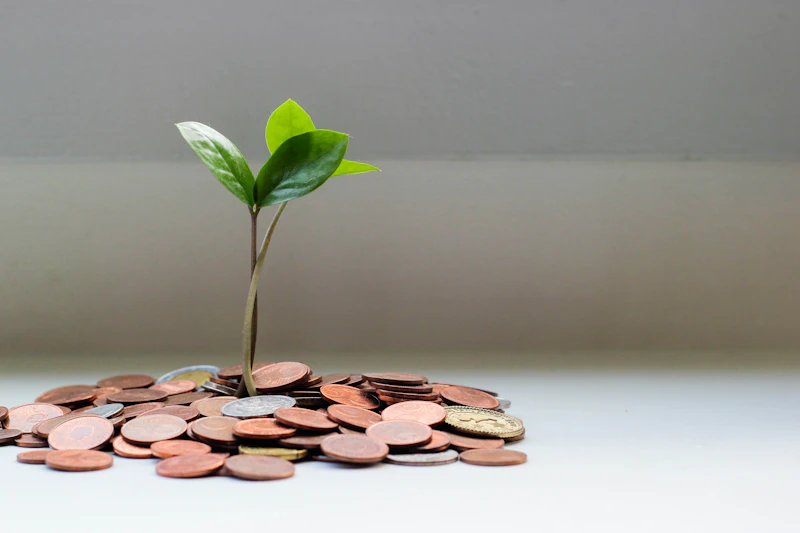
Why Is Compound Interest So Powerful for Long-Term Saving?

- Primary Signal: Why Is Compound Interest So Powerful for Long-Term Saving?
- Overview: Compound interest grows money on both contributions and past gains. Learn why starting early beats saving more, and what quietly eats your compounding....
- Verification: Analyzed and compiled by 1UpTrade Quant editorial monitoring desk.
The Short Answer
Compound interest is powerful because your gains start earning their own gains, so growth accelerates over time instead of staying linear. Simple interest pays only on the original amount, but compounding pays on the original plus everything accumulated so far. The effect looks modest for years, then explosive: a small monthly deposit over thirty years can dwarf a larger one over ten. That acceleration is why copy trading beginners and savers alike are told the same thing: time in the game matters more than perfect timing.
The Snowball Effect, Explained
Picture a snowball rolling downhill: tiny at first, then gathering mass faster with every rotation. Money compounds the same way. At a steady rate of return, doubling happens roughly every 72 divided by the annual rate years, the classic rule of 72, so seven percent doubles money about every decade. Three doublings turn one unit into eight. The math is relentless and boring, which is exactly its charm: no genius required, just patience and a rate of return that stays positive after fees and inflation.
Why Starting Early Beats Saving More
Time is the dominant variable in compounding. Someone who saves a modest amount from age 25 to 35 and then stops can end up with more at 65 than someone who saves twice as much from 35 to 65, assuming the same returns. The early starter's money gets forty years of compounding versus thirty for the late starter, and those extra ten years do the heaviest lifting. This is why delay is the true enemy of wealth building. Every year of waiting demands a much bigger monthly contribution later to reach the same finish line.
What Eats Your Compounding
Fees are compounding's silent enemy: a one percent annual fee can consume nearly a third of returns over thirty years, because the fee also compounds. Inflation quietly shrinks real gains, which is why nominal returns mislead. Taxes on withdrawals take another bite, and panic-selling during downturns locks in losses that destroy years of accumulation. The defense is simple: choose low-cost funds, stay diversified through broad index-style exposure, and avoid touching the money for decades. Compounding rewards the boring and punishes the restless.
Frequently Asked Questions
What is the rule of 72? Divide 72 by your annual return to estimate doubling time: at 7 percent, money roughly doubles every 10 years. Does compound interest work in a savings account? Yes, but at lower rates, so doubling takes much longer than in market investments. The principle is identical. Can compounding work against me? Absolutely. Credit card debt compounds against you at high rates, which is why unpaid balances grow so fast even when you make minimum payments.
More from 1UpTrade Quant