Trading Bot Slippage and Fees: Why Live Results Differ From Backtests
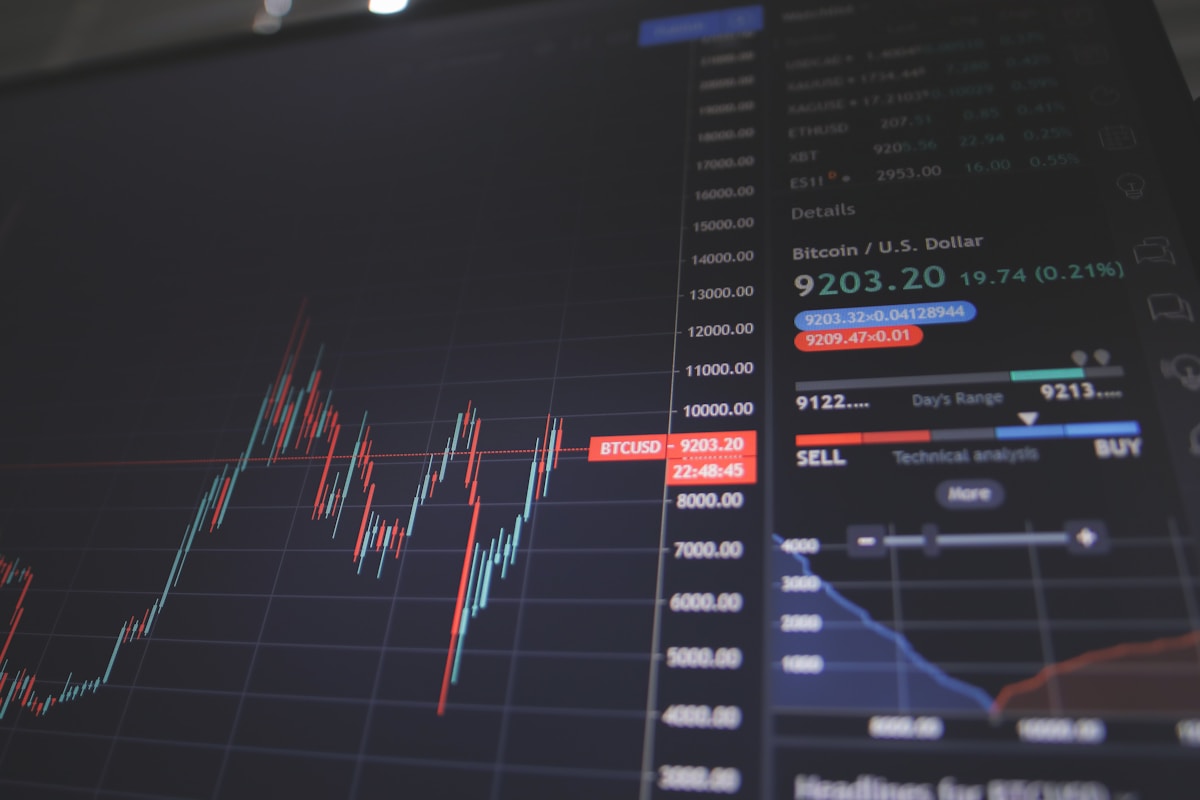
- Primary Signal: Trading Bot Slippage and Fees: Why Live Results Differ From Backtests
- Overview: Why trading bot live results differ from backtests: slippage causes, fee modelling mistakes, how to measure slippage per trade, and practical execution fixes....
- Verification: Analyzed and compiled by 1UpTrade Quant editorial monitoring desk.
Trading bot slippage is the gap between the price your bot expected and the price it actually got, and it is one of the main reasons live results disappoint backtests. In a backtest, orders often fill instantly at the signal price. In live markets, prices move between signal and execution, order books thin out, and large orders walk through multiple price levels. Each of these effects costs money, and for high-frequency or large-size bots, slippage can erase an entire edge that looked strong on paper.
Slippage has several causes, and diagnosing which one dominates matters. Latency slippage comes from the delay between signal generation and order arrival at the exchange, which grows with server distance and slow code. Liquidity slippage comes from thin order books, where your order size exceeds the volume available at the best price and fills at progressively worse levels. Volatility slippage comes from fast markets, where price moves sharply in the milliseconds of execution, especially around news events. Market orders suffer all three, while limit orders avoid price slippage but risk not filling at all.
Fees compound the problem. Many backtests use a single average fee or omit fees entirely, while real trading incurs maker and taker fees that vary by volume tier, plus spreads on every trade. A strategy trading dozens of times a day can be profitable before fees and unprofitable after them, and this gap is invisible until live results arrive. Always model fees conservatively in backtests, using taker fees unless your bot provably earns maker rebates, and add a slippage estimate based on the pair's typical spread and volatility.
Measuring slippage starts with logging three prices for every trade: the signal price when the decision was made, the order price submitted, and the actual fill price received. The difference between signal price and fill price is your total slippage, and tracking it by pair, time of day, and order size reveals patterns. You may find slippage is worst on thin pairs, during low-liquidity hours, or on larger orders, and each pattern points to a different fix, from switching pairs to reducing size or changing order types.
Compare live slippage against your backtest assumptions regularly. If live slippage runs consistently higher, your backtest was optimistic and your strategy's true edge is smaller than believed. In that case, either improve execution, through a closer server, faster code, or smarter order types, or accept that the strategy is not viable at its current frequency. Increasing trade frequency to compensate for slippage usually makes things worse, because each additional trade pays the same execution costs.
Practical fixes include hosting the bot near the exchange's servers, keeping code paths short between signal and order, using limit orders where fill certainty is less critical, splitting large orders into smaller ones, avoiding trading during news spikes and low-liquidity hours, and setting a maximum slippage tolerance that cancels orders when conditions deteriorate. Test each fix in paper trading first, measuring slippage before and after, so improvements are proven rather than assumed. Execution quality is an edge in itself, and traders who measure it honestly make better decisions about which strategies deserve live capital. Risk note: automated trading involves risk of loss, and execution costs can exceed expectations, so this article is educational, not financial advice.
Make execution quality a regular line in your performance reviews, alongside win rate and drawdown, because a strategy that looks profitable before costs but loses after them is not a working strategy. Track slippage and fees monthly, compare them with your backtest assumptions, and be willing to retire strategies whose execution costs cannot be brought under control.
📖 Continue Reading the Full Story
Continue reading this article on 1UpTrade Quant.
⚡ Access Full Content NowMore from 1UpTrade Quant



 📈 FreeRich FIRE
How Do Prop Trading Firms Handle Applicant and Partner Calls Around the Clock?
Prop firms attract global applicants across every time zone. Here's how an AI receptionist answers in your bra...
 💎 Try2Rich
2026 Industry Analysis: Freelancer Net Pay Calculator (PKR) — Upwork, Fiverr & Payoneer Fees (Day 3 Guide)
Why experts rely on Freelancer Net Pay Calculator (PKR) — Upwork, Fiverr & Payoneer Fees on Try2Rich. Discover...
 🎁 Get Rich Free
Strategic Positioning: Freelancer Net Pay Calculator (PKR) — Upwork, Fiverr & Payoneer Fees (Day 26 Guide)
Gaining a competitive advantage through Freelancer Net Pay Calculator (PKR) — Upwork, Fiverr & Payoneer Fees o...
💰 Free2Rich Online
Automation & Integration: Freelancer Net Pay Calculator (PKR) — Upwork, Fiverr & Payoneer Fees (Day 27 Guide)
Streamlining daily analytics with our Freelancer Net Pay Calculator (PKR) — Upwork, Fiverr & Payoneer Fees on ...